YOUR PARTNER
IN NEUROREHAB
Devices for verticalisation and gait training, with complete support for your team from the first demo to daily therapy.
Book a demo Try it with your patients
ISO 13485 CERTIFIED · CE MARKED · FDA REGISTERED
OUR DEVICES FOR YOUR CLINIC
One pathway from assessment to walking at home. Every device is chosen to fit the stage your patient is in.
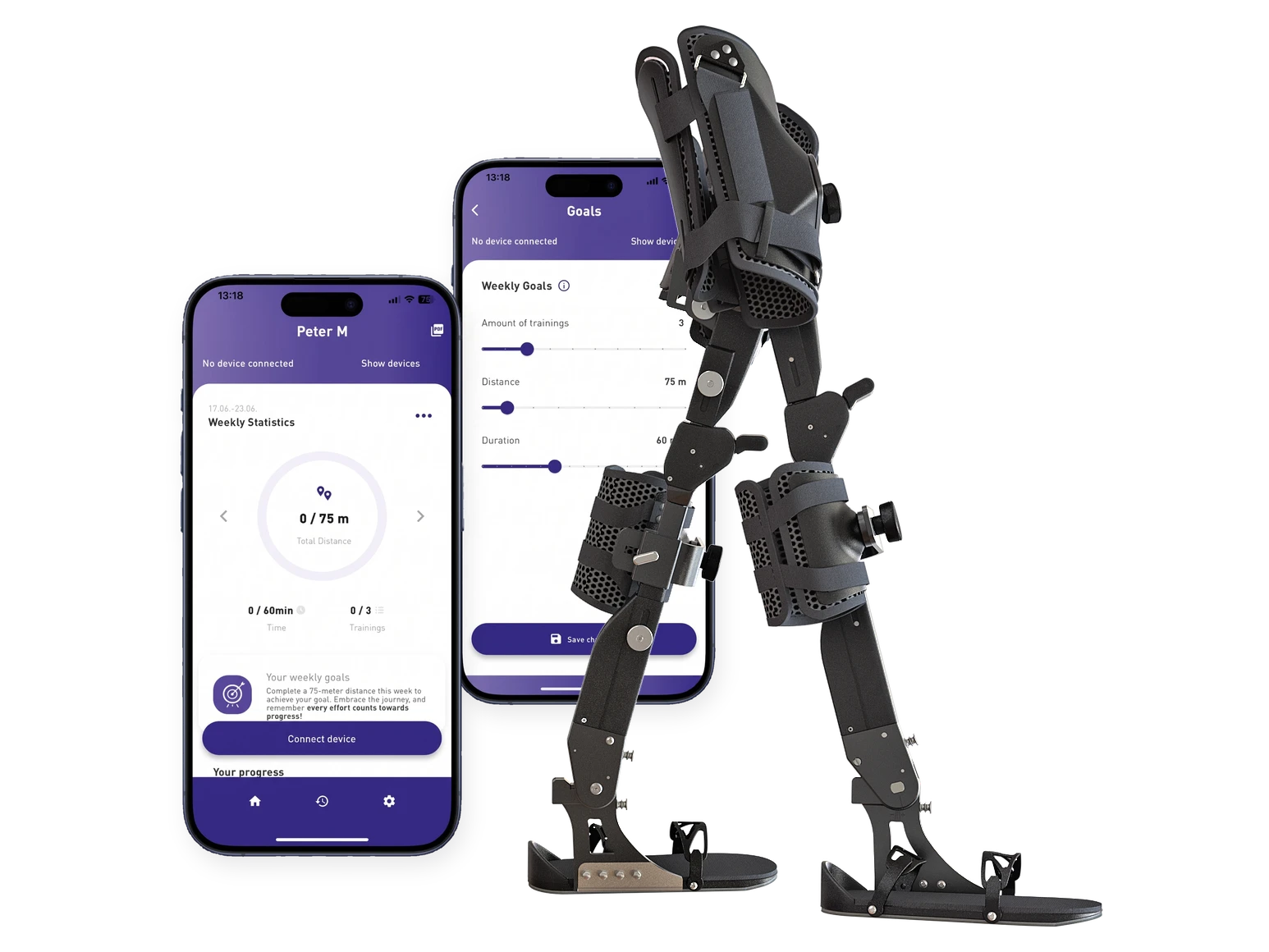
1 · ASSESS
Assess and track progress.
We help your team check whether a patient is suitable, choose the right size and set up the device during the demo and trial. The MEBSTER App then records walking symmetry, speed and range of motion in every session.
2 · STAND AND WALK
Verticalisation and gait training.
A mechanical exoskeleton and a platform walker for the clinic. No motors, adjustable for different patients.
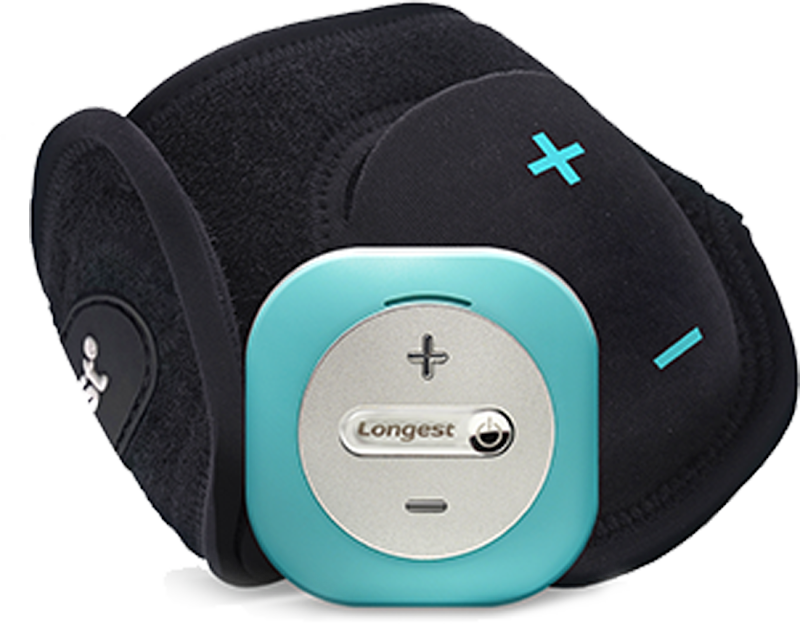
3 · STIMULATE
Functional electrical stimulation.
FES alongside gait training, from a drop foot system worn on the lower leg to full body stimulation (coming soon).
FULL BODY FES
COMING SOON
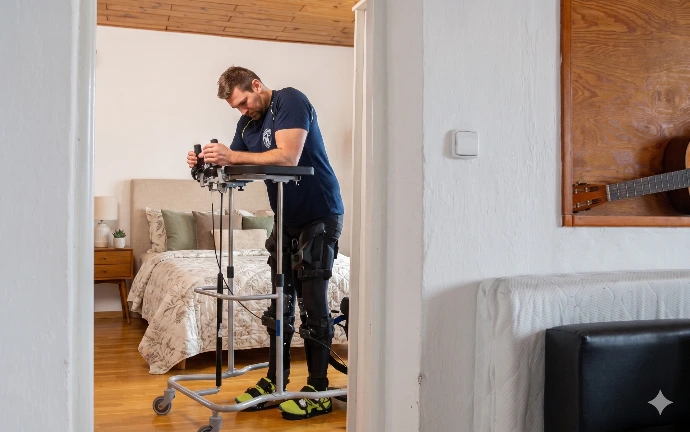
4 · CONTINUE AT HOME
Your patients keep going after discharge.
UNILEXA HOME is customised for each user and used with Walker VELA, so training can continue at home with your guidance.
VERTICALISATION, GAIT TRAINING, MUSCLE STIMULATION.
ONE FAMILY OF DEVICES, ONE PARTNER.
UNILEXA PRIME™ · WHAT YOUR CLINIC GETS
Made for busy rehabilitation teams.
Set of two sizes
Sold as a set of two sizes, S (165–180 cm) and L (180–195 cm), XS (145–160 cm) on request. Maximum user weight 100 kg.
Interchangeable cuffs
Ready for the next patient
Easy to clean
Removable padding
See the progress together
Every session recorded in the MEBSTER App, for you and your patient
CE marked
Class I medical device, EU MDR compliant
No motors. Adjustable to the next patient in minutes.
Try UNILEXA PRIME in your own clinic. We offer a free trial period with your patients and your team.
SUPPORT THAT STAYS WITH YOUR TEAM
From the first demo to everyday use, we work with your therapists so the devices become part of your clinic's routine.
DEMO AND FREE TRIAL
More ↻
DEMO AND FREE TRIAL
Online or in your clinic, and a trial with your own patients before you decide.
TRAINING
More ↻
TRAINING
On-site training when the device arrives, with a certificate for your physiotherapists, and online courses for donning, standing up, walking, sitting down and doffing. New colleagues can be trained whenever they join.
SERVICE AND SUPPORT
More ↻
SERVICE AND SUPPORT
Repairs, spare parts, annual safety inspections and upgrades, including new versions of the MEBSTER App. By MEBSTER or your distributor, under our ISO 13485 certified quality system.
BUILT ON MOVEMENT RESEARCH
Biomechanics lab
Motion capture, EMG and mechanical testing in our own lab.
Research partners
Development with IT4Innovations, the national supercomputing centre, and VÚTS.
STUDIES ON OUR DEVICES
WHAT THE RESEARCH SAYS
Physical activity, standing and walking after spinal cord injury: findings from guidelines and systematic reviews.
These findings concern physical activity, standing and walking in general. They are not claims about any specific device, including UNILEXA.
Movement is recommended.
International guidelines recommend regular aerobic and strength exercise for adults with spinal cord injury, adapted to each person's abilities.
Fitness and heart health.
In chronic spinal cord injury, systematic reviews show regular exercise can improve fitness, strength and cardiometabolic risk factors.
Source: van der Scheer et al., 2017 →
Less sitting, more moving.
WHO guidelines state that, for people living with disability, the benefits of appropriate physical activity generally outweigh the risks.
Source: Carty et al., 2021 (WHO) →
Well-being.
Exercise programmes have been linked with improved well-being and quality of life in adults with spinal cord injury; certainty of evidence is low.
Source: Ponzano et al., 2024 →
At eye level.
In interviews, people with spinal cord injury described psychological benefits of standing and walking at eye level with family and peers.
Source: Kinnett-Hopkins et al., 2020 →, Fortin-Bédard et al., 2026 →
Standing and joint range.
A systematic review found supported standing may help maintain range of motion; effects are small and evidence for other outcomes weak.
Walking practice.
Reviews report that exoskeleton gait training can improve walking measures after spinal cord injury, mostly in incomplete injuries. Studies remain small.
SEE OUR DEVICES IN YOUR CLINIC
Book a demo online or in your clinic. Have patients who could benefit? Ask us about a trial with them.
Have more questions? Read our FAQ →